
How to Size Bottom Grids for Stainless Steel Sinks
Quick Answer
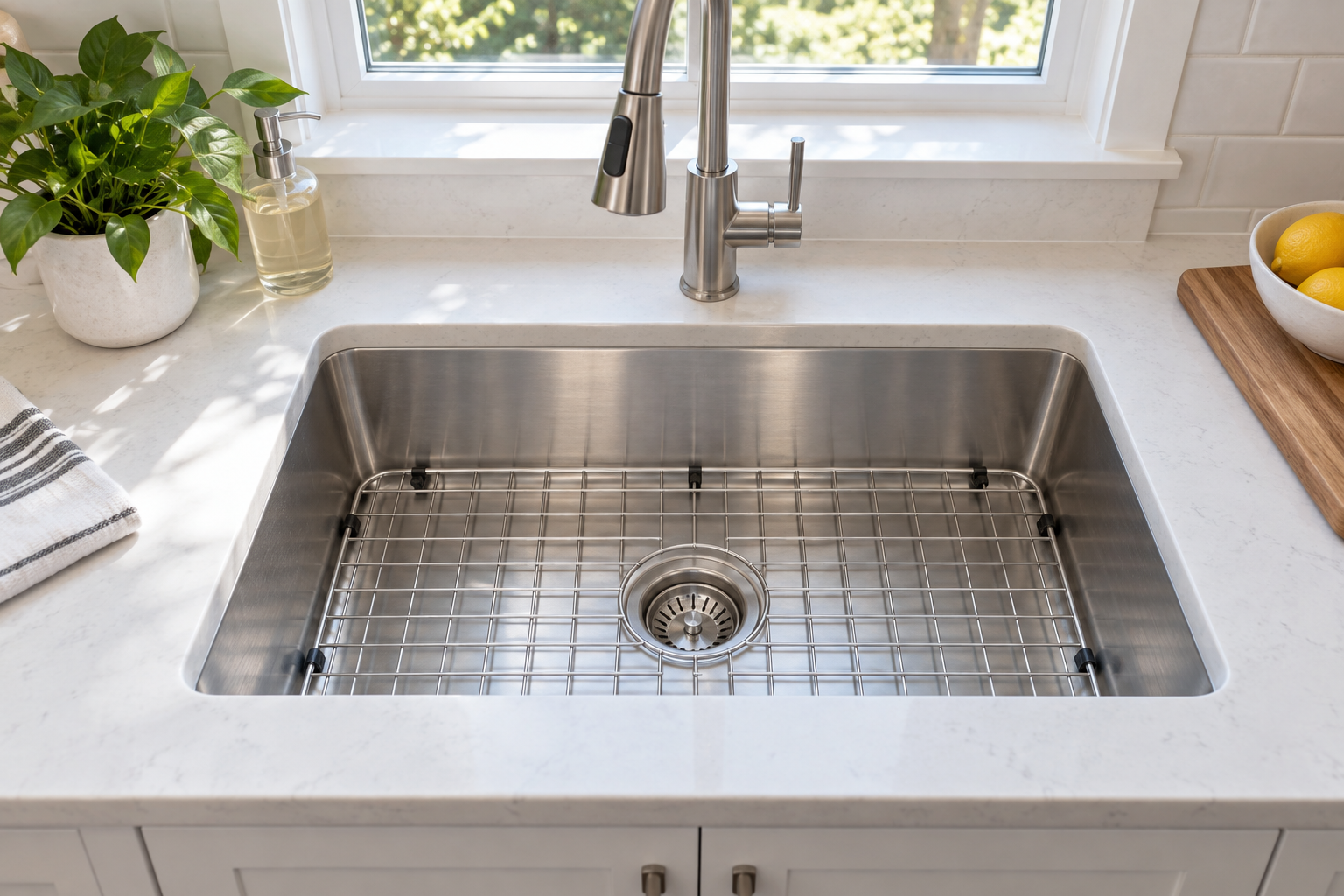
A sink bottom grid should be sized from the usable bowl floor, not only the sink’s advertised outside dimensions. Buyers must check the bowl taper, corner radius, drain center, grid opening, perimeter clearance, feet, and dishwasher access. A correctly matched grid protects the bowl and strengthens an accessory bundle; a poor fit creates movement, blocked drains, and returns.
Why Is the Sink Model Number Not Enough?
Two sinks with similar overall dimensions can have different bowl floors, wall taper, corners, and drain positions. A grid copied from the nominal sink size may touch the walls, leave excessive gaps, or place its opening away from the strainer.
For replacement grids and private-label bundles, use a controlled grid drawing linked to the exact bowl revision. This is more reliable than asking customers to select only by sink width.
Which Dimensions Should Buyers Confirm?
| Grid Detail | Purpose | Failure to Avoid |
|---|---|---|
| Outside grid length and width | Provides an even perimeter gap | Grid rubs the bowl or moves excessively |
| Corner radius | Matches usable bowl-floor geometry | Corners lift or leave awkward gaps |
| Drain-opening center | Allows strainer access and drainage | Grid blocks or partly covers drain |
| Feet height and location | Supports cookware above the bowl floor | Rocking, scratching, or unstable loads |
What Belongs in the Sample Fit Test?
- Place the grid flat in a production-representative bowl
- Check an even gap around all sides and corners
- Confirm the drain opening is centered over the strainer
- Press each corner to check rocking or flex
- Verify protective feet and bumpers stay attached
- Test removal, cleaning, and dishwasher practicality
- Check that the grid cannot damage the sink during packed shipment
How Should Distributors Package the Grid?
Separate the grid from the sink surface with protective material and secure it so the metal cannot move during transport. Include a clear model reference in the carton or accessory label, because similar-looking grids are difficult to identify after unpacking.
A distributor launching several bowl sizes can reduce picking errors by assigning each sink-grid combination its own accessory code. The website, carton, and replacement-parts list should use the same code.
When Is a Custom Grid Worth Considering?
A custom grid may be useful for a distinctive bowl shape, rear or offset drain, workstation sink, or private-label accessory bundle. Buyers should balance visual fit with practical wire spacing, weld quality, feet placement, cleaning, and replacement availability.
Yannieware can discuss stainless steel sink and accessory matching for wholesale, project, and private-label programs. Final fit should be approved against drawings and samples before bulk production.
FAQ
Should a bottom grid touch the sink walls?
No. A small, even gap helps prevent rubbing and makes the grid easier to remove and clean. The appropriate clearance depends on the bowl geometry.
Can the drain opening be larger than the strainer?
It usually needs enough clearance for normal strainer access without weakening the grid or leaving an awkward opening. Confirm it with the selected drain part.
Are rubber feet and bumpers necessary?
Protective contact points help separate the metal grid from the sink surface and improve stability. Their material, placement, attachment, and replacement plan should be checked.
What should buyers send for grid matching?
Send the exact sink model, bowl drawing, usable floor dimensions, corner radius, drain center, strainer type, desired wire layout, and packaging plan.
Contact Yannieware
For sink and bottom-grid matching, email bobo@yannieware.com or contact +86-13536023370.