
Residential vs Commercial Stainless Steel Sinks for Project Buyers
Quick Answer
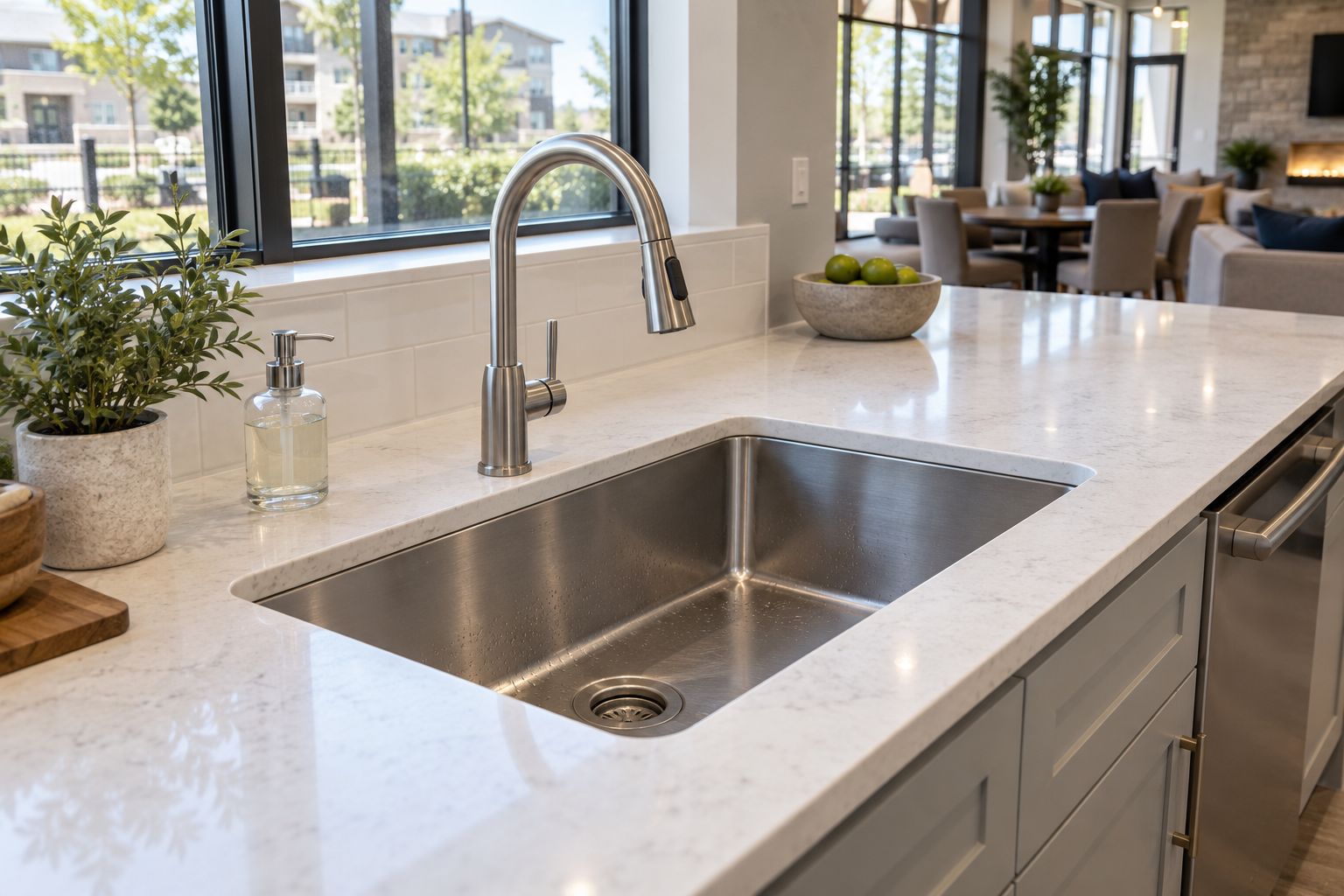
Residential and commercial stainless steel sinks are selected around different operating priorities, but project labels alone are not enough. A multifamily clubhouse, rental unit, café prep area, hotel kitchenette, and restaurant wash zone place different demands on bowls, mounting, cleaning, accessories, and service. Buyers should define the actual users and workload before choosing the specification.
What Usually Separates Residential and Commercial Priorities?
Residential kitchens typically balance appearance, cabinet integration, quieter use, accessories, and familiar installation. Commercial settings usually give more weight to repeated cleaning, workflow, bowl capacity, service access, and durability under frequent use.
Some projects sit between these categories. A clubhouse kitchen may need residential styling with higher-use hardware, while a hotel kitchenette may prioritize compact dimensions, easy cleaning, and straightforward replacement.
Which Questions Should Drive the Specification?
| Decision | Residential Emphasis | Commercial or High-Use Emphasis |
|---|---|---|
| Installation | Cabinet and countertop appearance | Service access and repeatability |
| Bowl layout | Daily cooking and accessory use | Defined prep, wash, or utility workflow |
| Cleaning | Easy household maintenance | Frequent cleaning and simple surfaces |
| Accessories | Grid, rack, board, and strainer bundle | Only items that support the work process |
| Replacement | Model continuity and homeowner support | Standardized parts and fast identification |
What Should a Project Buyer Document?
- Room type, expected users, and daily tasks
- Cabinet, countertop, wall, and plumbing constraints
- Mounting style, bowl count, dimensions, and depth
- Drain, faucet, disposer, and accessory requirements
- Cleaning expectations and acceptable corner geometry
- Packaging, installation instructions, spare parts, and replacement plan
Where local health, building, accessibility, or plumbing requirements apply, the project team should confirm them with the responsible local professionals. A product description should not replace project-specific compliance review.
How Can Buyers Avoid Over-Specifying?
More features do not automatically create a better project sink. A complex workstation bundle may be useful in a premium residence but unnecessary in a utility room. A very deep bowl may add capacity while creating cabinet, accessibility, or plumbing conflicts.
For example, a multifamily buyer can standardize one residential sink for apartments and select a separate high-use model for the shared clubhouse. This keeps replacement simple without forcing one specification into two different workflows.
When to Choose Yannieware
Yannieware can support B2B discussions for residential, multifamily, hospitality, wholesale, private-label, and suitable light-commercial stainless steel sink programs. Buyers can review bowl layout, dimensions, mounting, finish, drain position, accessories, packaging, and project documentation together.
FAQ
Is a thicker sink always better for commercial use?
Not by itself. Material thickness is one part of the specification; construction, support, bowl geometry, use pattern, and installation also matter.
Can a residential sink be used in a clubhouse kitchen?
It may be suitable if its dimensions, mounting, cleaning, faucet, accessories, and expected workload are reviewed for that shared space.
Should commercial projects use the deepest possible bowl?
No. Depth should support the task while preserving ergonomic, cabinet, plumbing, and accessibility requirements.
What should buyers include in an inquiry?
Send the room type, user profile, sink dimensions, mounting, cabinet and plumbing drawings, faucet and drain plan, accessories, packaging, and replacement expectations.
Contact Yannieware
For a project-specific sink discussion, email bobo@yannieware.com or contact +86-13536023370.