
Stainless Steel Sink Cutout Templates: A B2B Approval Checklist
Quick Answer
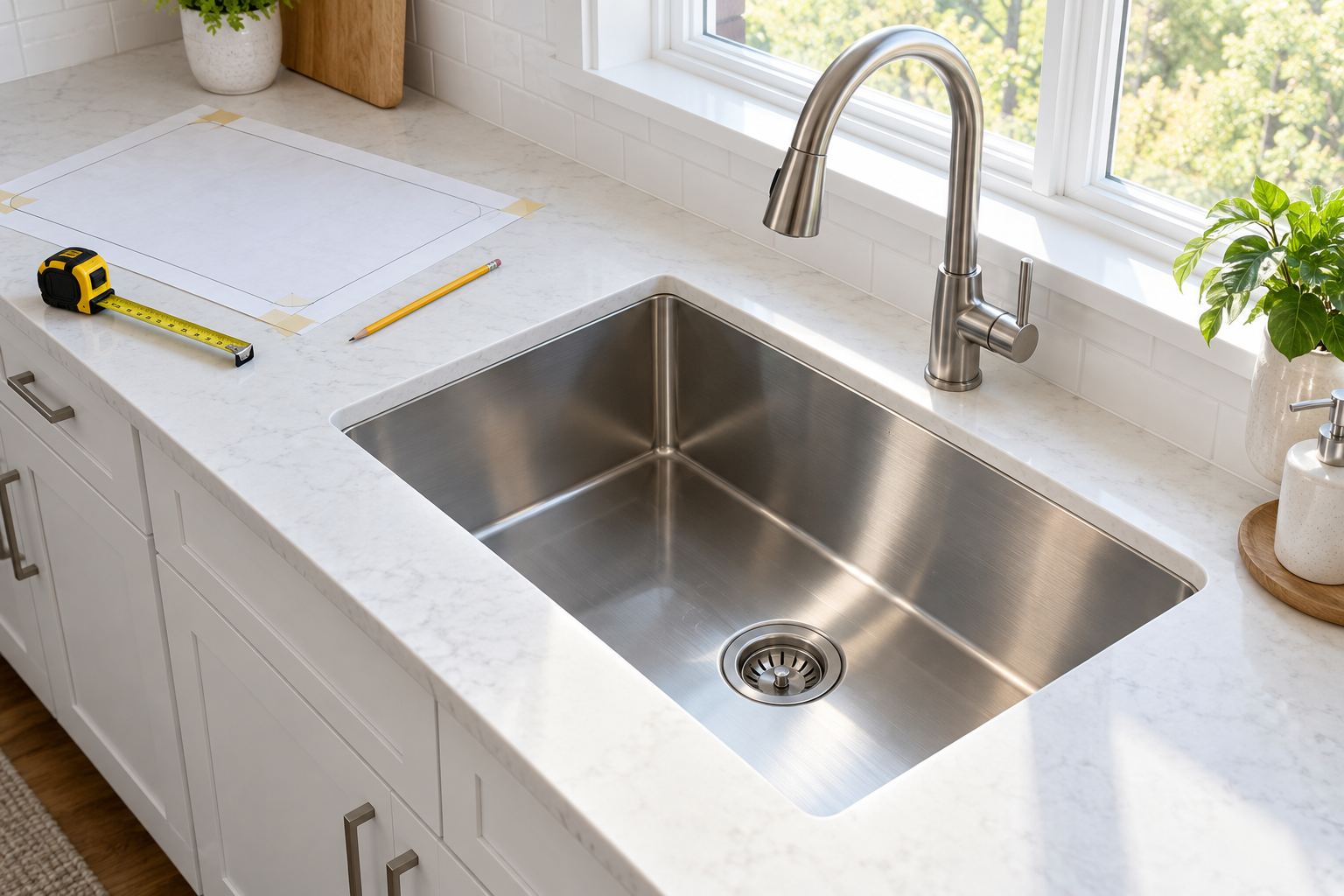
A stainless steel sink cutout template should be approved together with the actual sink drawing, mounting method, countertop material, reveal preference, faucet position, and cabinet clearance. For builders, distributors, countertop fabricators, and private-label buyers, this combined review reduces site trimming, uneven reveals, and responsibility disputes before a project reaches installation.
Why Can a Correct Sink Still Be Installed Incorrectly?
The sink dimensions and the countertop opening are separate specifications. A basin may match the purchase order while an outdated or incorrectly scaled cutout creates a poor reveal, weak support area, or conflict with the faucet deck.
The risk increases when one template is reused across revisions. B2B buyers should identify the drawing revision on the sample approval, production order, and file sent to the countertop fabricator.
What Should Buyers Approve Before Cutting the Countertop?
| Approval Item | What to Confirm | Main Risk |
|---|---|---|
| Sink model and revision | Overall size, bowl size, corner radius, and flange | Template does not match production sink |
| Mounting method | Undermount, topmount, flushmount, or apron-front | Wrong opening or support detail |
| Reveal | Positive, zero, or negative reveal where applicable | Inconsistent finished edge |
| Countertop and faucet | Material, front rail, faucet hole, and backsplash clearance | Cracking or crowded installation |
Which Measurements Belong in the Approval File?
- Sink outside dimensions and bowl dimensions
- Flange width and mounting-clip locations
- Cutout dimensions, corner radii, and centerlines
- Front and rear countertop rail allowances
- Faucet, soap dispenser, and accessory-hole positions
- Cabinet width, internal bracing, drawer, and plumbing clearance
Do not scale a drawing from a screen or printed page unless the file explicitly supports it. Use stated dimensions and verify the physical sample when the countertop will be fabricated before the bulk sinks arrive.
How Should Project Teams Control Revisions?
Use one approved PDF or CAD reference with a clear model name and revision date. The buyer, sink supplier, cabinet team, and countertop fabricator should work from the same file. If a bowl radius, flange, or accessory changes, reissue the approval rather than editing an old template informally.
For example, an apartment buyer may approve a deeper bowl after the first sample. If the old cutout remains with the fabricator, the revised sink can reach the site while the countertops are already wrong. A controlled revision step prevents that avoidable mismatch.
When to Choose Yannieware
Yannieware can discuss stainless steel sink dimensions, mounting style, drain position, accessories, and private-label requirements as one sourcing package. Buyers should still approve final production drawings and physical samples before countertop fabrication or bulk installation.
FAQ
Can one cutout template fit several sink models?
Only when the outside flange, bowl geometry, corners, and mounting method are confirmed as identical. Similar catalog dimensions do not guarantee the same cutout.
Should the countertop be cut before the sample arrives?
For repeat verified models, an approved controlled drawing may be sufficient. For a new custom or revised sink, checking a physical sample reduces risk.
Who should approve the reveal?
The buyer or designer should specify the intended reveal, while the fabricator confirms it is practical for the countertop material and sink flange.
What should buyers send Yannieware?
Send the sink model or target dimensions, mounting method, cabinet size, countertop material, reveal preference, faucet plan, accessories, and project quantity.
Contact Yannieware
For a useful specification review, email the sink and cabinet drawings to bobo@yannieware.com or contact +86-13536023370.